
Ten years later, her daughter faces the same walk, the same school, the same odds.
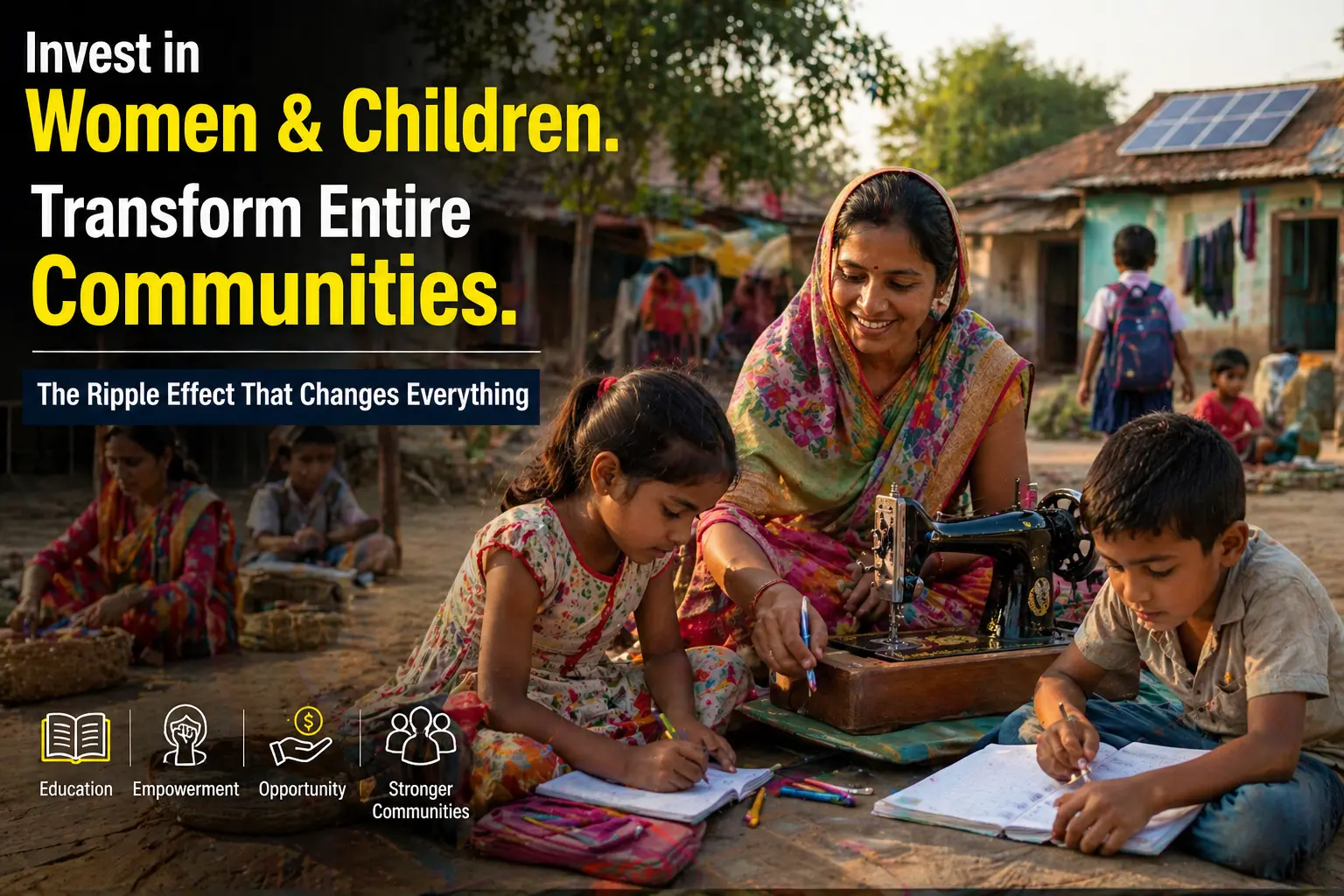
This is not a story about one girl. It’s the story of 130 million girls worldwide who are out of school right now. It’s the story of cycles that repeat across generations — not because the people trapped in them lack intelligence, ambition, or resilience, but because the systems around them were never designed to let them succeed.
Breaking these cycles is the most powerful thing any community, organization, or individual can do. And the evidence is overwhelming: when you invest in women and children — genuinely invest, with sustained commitment and locally rooted solutions — you don’t just change individual lives. You reshape entire communities, economies, and societies.
This is the story of how that transformation happens, why it matters more in 2026 than ever before, and what the most effective approaches look like on the ground.
The Multiplier Effect: Why Women and Children Are the Highest-Return Investment
Development economists have a concept called the “multiplier effect.” When you invest a dollar in a woman’s education or economic capability, that dollar doesn’t stop with her. It ripples outward — to her children, her household, her community, and eventually her nation’s economy.
The data behind this concept is staggering. According to the World Bank, women reinvest up to 90% of their income back into their families, compared to 30 to 40% for men. That means every dollar a woman earns flows directly into food, healthcare, education, and housing for her children. It doesn’t leak into personal consumption the way income sometimes does in other contexts — it goes straight to building the next generation.
The educational dimension is equally powerful. Research across 26 African countries has demonstrated a consistent positive relationship between women’s empowerment and early childhood development, particularly in literacy and cognitive skills. When a mother is educated, her children are significantly more likely to attend school, stay in school, and perform better academically. The UNESCO Institute for Statistics estimates that if all women completed secondary education, child deaths could fall by 49% — saving nearly 3 million lives annually.
These aren’t theoretical projections. They’re documented outcomes from decades of research across dozens of countries. And they point to a simple truth: investing in women and children isn’t charity. It’s the most efficient development strategy available.
The Scale of the Challenge in 2026
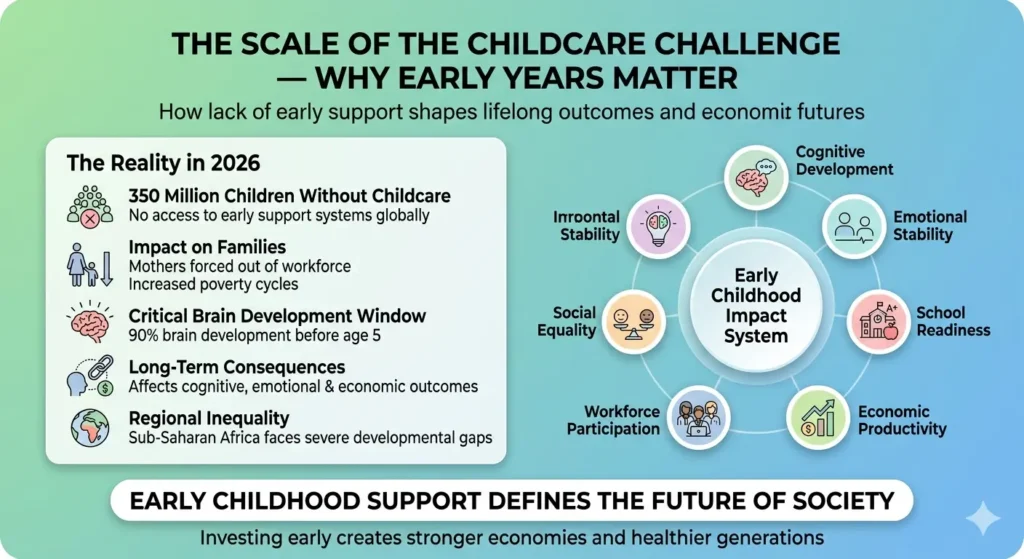
Despite decades of progress, the gaps remain enormous.
Globally, 350 million children lack access to any form of childcare — a deficit that forces mothers out of the workforce and traps families in poverty cycles. Over 90% of brain development occurs before age five, which means the absence of early childhood support doesn’t just affect today’s children. It shapes the cognitive, emotional, and economic trajectory of an entire generation.
In sub-Saharan Africa, 55% of children experience multidimensional poverty — meaning they face deprivation in at least three dimensions of well-being simultaneously, whether that’s nutrition, education, healthcare, shelter, or clean water. This represents a worsening trend over the past decade, with rural children disproportionately affected: 66% of rural children live in multidimensional poverty compared to 28% of urban children.
For women specifically, the barriers remain deeply structural. Only 24% of national parliament seats worldwide are held by women. Just 13% of agricultural land is owned by women, despite women performing the majority of agricultural labor in developing nations. Over 19% of women aged 15 to 49 have experienced physical or sexual violence. And women make up a disproportionate 70% of the world’s poor.
These statistics aren’t just numbers on a page. They represent real human potential that’s being wasted — potential that, if unleashed, would transform economies and communities from the ground up.
Education: The Foundation That Changes Everything
If there is a single intervention that research consistently identifies as the most powerful driver of progress for women and children, it’s education. Not just access to a school building, but access to quality education that builds real skills, real confidence, and real opportunities.
Why Girls’ Education Matters Differently
Girls’ education has a unique multiplier effect that boys’ education, while important, doesn’t replicate. When girls complete secondary education, the cascade of outcomes includes delayed marriage (reducing child marriage rates dramatically), lower fertility rates (giving women greater control over family planning), higher household income (as educated women enter the workforce with greater earning capacity), improved child health and nutrition (as educated mothers make better-informed decisions about healthcare and diet), and greater civic participation (as women with education engage more actively in community leadership and governance).
Rwanda provides one of the most compelling examples of this dynamic. After the 1994 genocide, the country implemented aggressive pro-women reforms, including reserving seats for women in parliament and investing heavily in girls’ education. Between 2000 and 2015, average income in Rwanda more than doubled, outpacing the broader sub-Saharan African average. Women now hold over 60% of parliamentary seats, making Rwanda the world leader in women’s political representation.
The connection isn’t coincidental. Educated women drive economic growth. Countries that fail to educate their girls leave enormous economic potential on the table — not in some distant future, but right now.
The Quality Gap
Access alone isn’t enough. Millions of children attend school but learn almost nothing — a phenomenon the World Bank calls “learning poverty.” A child who sits in a classroom for six years but never learns to read hasn’t received an education. They’ve received a building.
Effective educational interventions focus on learning outcomes, not just enrollment numbers. This means trained teachers, appropriate learning materials, safe and supportive school environments, nutrition programs that ensure children can concentrate, and curricula that are relevant to students’ lives and communities.
Organizations working at the grassroots level understand this intuitively. Foundations like the Waka Foundation focus precisely on this intersection — ensuring that the support reaching women and children translates into real, measurable improvements in their lives rather than just ticking boxes on a development checklist. When brighter futures are built one family at a time, with attention to the specific barriers each community faces, the outcomes are far more durable than top-down programs that look impressive in reports but dissolve on the ground.
Healthcare: The Silent Barrier
Education and healthcare are deeply intertwined. A child who is malnourished can’t learn effectively. A mother who lacks access to prenatal care faces higher risks during childbirth. A community without basic healthcare infrastructure loses its most productive members to preventable diseases.
Maternal Health
Every day, approximately 800 women die from preventable causes related to pregnancy and childbirth. The vast majority of these deaths occur in developing countries, and most could be prevented with access to skilled healthcare workers, essential medicines, and basic medical infrastructure.
Maternal mortality doesn’t just claim individual lives — it devastates entire families. When a mother dies, her surviving children are significantly more likely to die within the first two years. They’re more likely to drop out of school. They’re more likely to experience poverty, exploitation, and abuse. A mother’s survival is, quite literally, the foundation on which her children’s futures rest.
Investing in maternal healthcare — prenatal visits, skilled birth attendance, emergency obstetric care, and postnatal support — has one of the highest returns of any health intervention. For every dollar spent on maternal and newborn health, the economic returns are estimated at $20 or more, measured in reduced healthcare costs, increased productivity, and improved outcomes for the next generation.
Child Nutrition
Malnutrition in the first 1,000 days of a child’s life — from conception through age two — causes irreversible damage to brain development, physical growth, and immune function. A child who is stunted due to malnutrition will never fully recover, even if nutrition improves later. Their cognitive capacity, earning potential, and health outcomes are permanently diminished.
Globally, 149 million children under five are stunted. That’s 149 million futures truncated before they properly begin — not because of lack of food in the world, but because of how food, wealth, and opportunity are distributed.
Effective nutrition programs combine direct food supplementation with education for mothers about breastfeeding, complementary feeding, and hygiene. They work best when embedded within broader community health systems that address the interconnected needs of women and children together, rather than treating nutrition as an isolated issue.
Mental Health and Psychosocial Support
An increasingly recognized dimension of women and children’s wellbeing is mental health. Women experiencing domestic violence, displacement, or extreme poverty carry psychological burdens that affect every aspect of their functioning — including their ability to care for their children. Children exposed to violence, neglect, or chronic stress develop in fundamentally different ways than those who grow up in safe, nurturing environments.
Yet mental health remains one of the most underfunded areas in global development. In many communities, it carries stigma that prevents people from seeking help. Organizations that integrate psychosocial support into their programs — alongside education, healthcare, and economic empowerment — address the whole person, not just the visible symptoms of poverty.
Economic Empowerment: Beyond Survival to Agency
Education and healthcare create the conditions for change. Economic empowerment gives women the agency to drive it.
Microfinance and Beyond
The microfinance movement demonstrated that small loans to women in developing countries could spark entrepreneurship and improve household welfare. But the field has evolved beyond simple credit provision. Today’s most effective economic empowerment programs combine financial access with business training, mentorship, market connections, and savings mechanisms.
The key insight is that money alone doesn’t create lasting change. A woman who receives a loan without understanding how to manage cash flow, price products, or access markets is likely to struggle. But a woman who receives capital alongside the knowledge and networks to use it effectively can build a business that sustains her family for decades.
The Childcare-Employment Connection
One of the most significant barriers to women’s economic participation is the absence of childcare. Globally, 350 million children lack access to childcare. When women can’t find safe, affordable care for their children, they can’t work — and they remain economically dependent on others.
The World Bank estimates that expanding childcare investments could create 96 million new decent jobs globally in the childcare sector alone. This represents a double dividend: women gain access to employment while their children receive the early developmental support that shapes their future learning and earning capacity.
Countries that have invested in universal or subsidized childcare consistently see higher rates of women’s workforce participation, higher household incomes, and better developmental outcomes for children. It’s one of the clearest win-win investments in the development landscape.
Digital Inclusion
In 2026, economic opportunity increasingly depends on digital access and literacy. Women in developing countries are significantly less likely than men to have access to the internet, smartphones, or digital financial systems. This digital gender gap translates directly into an economic gap — women who can’t access digital markets, banking, or information networks are locked out of the fastest-growing segments of the global economy.
Programs that combine digital literacy training with access to technology are bridging this gap in innovative ways. Mobile banking has transformed financial inclusion for women in East Africa. E-commerce platforms are connecting women artisans with global markets. Digital health information is reaching mothers in remote communities through SMS-based programs.
The digital dimension also matters for the organizations driving this work. Foundations and nonprofits serving women and children increasingly need to maintain a clear and findable presence across the web so that supporters, partners, and the communities they serve can connect with their mission regardless of geography. In a world where visibility shapes viability, even mission-driven organizations need their digital presence to match the urgency of their work on the ground.
Protection: The Prerequisite for Everything Else
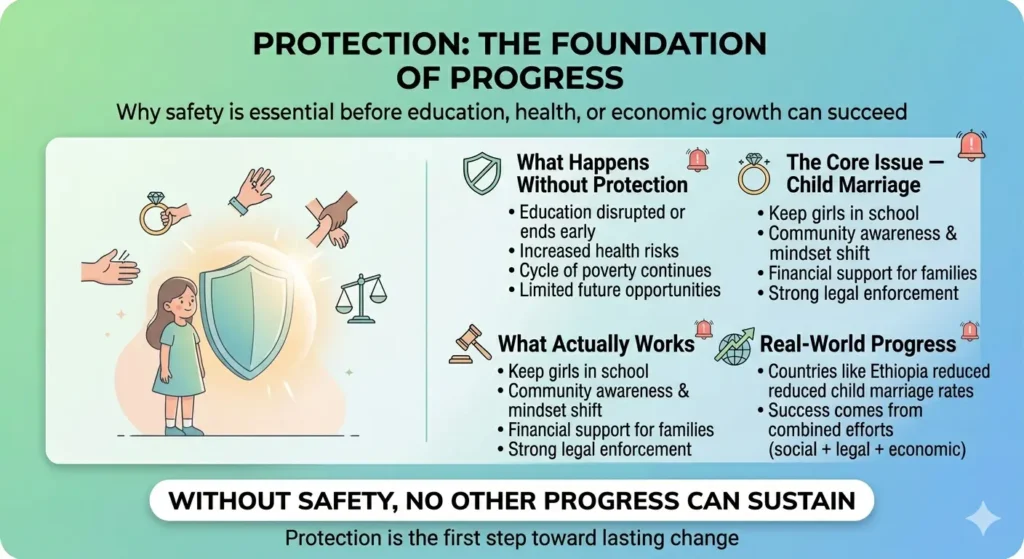
None of the investments described above — in education, healthcare, or economic empowerment — can succeed if women and children aren’t safe. Protection from violence, exploitation, and abuse is the foundation upon which all other progress rests.
Child Marriage
Every year, 12 million girls are married before the age of 18. Child marriage ends education, increases health risks (girls under 15 are five times more likely to die in childbirth than women in their twenties), and perpetuates poverty across generations.
The most effective interventions against child marriage combine keeping girls in school (educated girls are six times less likely to be married as children), community engagement that shifts social norms around marriage age, economic support that reduces the financial incentive for families to marry daughters early, and legal frameworks that establish and enforce minimum marriage ages.
Countries that have made progress — like Ethiopia, which reduced child marriage rates from 60% to 40% over a decade — have done so through coordinated efforts that address economic, cultural, and legal dimensions simultaneously.
Gender-Based Violence
Over 19% of women globally have experienced physical or sexual violence from an intimate partner. In conflict-affected regions, these rates are dramatically higher. Gender-based violence doesn’t just harm individual women — it teaches children that violence is normal, perpetuating cycles of abuse across generations.
Effective responses combine immediate support (shelters, legal aid, medical care) with prevention (community education, engaging men and boys as allies, economic empowerment that reduces dependence on abusive partners). The evidence consistently shows that prevention is more effective and less costly than response alone — but both are necessary.
Trafficking and Exploitation
Children in poverty are particularly vulnerable to trafficking, forced labor, and sexual exploitation. Girls who are out of school, displaced by conflict, or separated from their families face the highest risks. Protective interventions — keeping children in school, strengthening family economic stability, improving birth registration systems, and training community members to recognize and report trafficking — can dramatically reduce vulnerability.
What Effective Organizations Do Differently
Not all interventions are equally effective. Decades of development experience have revealed clear patterns in what works and what doesn’t.
Community-Led Solutions
The most durable changes come from within communities, not from outside them. External organizations that impose solutions designed in distant offices frequently fail because they don’t account for local context, culture, and priorities. The most effective approach is to work alongside communities — supporting local leaders, strengthening local institutions, and ensuring that the people most affected by poverty and inequality have a genuine voice in the solutions designed to address it.
Integrated Programming
The challenges facing women and children don’t exist in isolation, and neither should the solutions. A girl who attends school but can’t concentrate because she’s malnourished hasn’t been helped effectively. A woman who receives a loan but can’t use it because she’s trapped in an abusive relationship hasn’t been empowered. A child who survives infancy but has no access to early learning hasn’t been given a fair start.
The most effective programs integrate education, healthcare, nutrition, protection, and economic empowerment into coherent systems that address the whole person and the whole family. This is more complex and more expensive than single-issue interventions, but the outcomes are dramatically better and more sustainable.
Measuring What Matters
Too many development programs measure inputs (money spent, programs launched, workshops held) rather than outcomes (lives improved, skills gained, income increased). This creates a perverse incentive to look busy rather than be effective.
The organizations that make the biggest difference measure what actually matters: Are children learning to read? Are mothers surviving childbirth? Are families earning enough to feed themselves? Are girls staying in school through secondary education? Are women gaining decision-making power in their households and communities?
These outcome measurements require more effort and more honesty than input metrics, but they’re the only way to know whether the work is actually working.
Long-Term Commitment
Lasting change takes time. A one-year program can introduce new ideas. A three-year program can build new habits. A decade-long commitment can transform a community. But many funding cycles operate on 12 to 24-month horizons, forcing organizations to constantly restart rather than sustain.
The foundations and organizations that achieve the deepest impact are those that commit to communities for the long term — building relationships, developing local capacity, and staying present through the inevitable setbacks and course corrections that real change requires.
How Individuals Can Make a Difference
The scale of the challenge can feel paralyzing. With 130 million girls out of school and 149 million children stunted by malnutrition, what can any individual possibly do?
More than you think.
Informed Giving
Not all charities are equally effective. Before donating, research how organizations spend their funds, what outcomes they achieve, and how they measure their impact. Look for transparency in financial reporting, evidence of community involvement in program design, and a track record of sustained presence in the communities they serve.
Advocacy
Individual voices, amplified through social media, community organizations, and political engagement, shape the policies that determine how resources flow to women and children. Advocating for girls’ education funding, maternal healthcare investment, childcare infrastructure, and gender-based violence prevention doesn’t require expertise — it requires persistence.
Contact your representatives. Share credible information about the issues. Support campaigns that push for policy changes. Every conversation that shifts someone’s understanding of why investing in women and children matters is a small but real contribution to change.
Volunteering Skills
Many organizations working with women and children in developing regions need skills that professionals in developed countries take for granted — accounting, marketing, technology, legal expertise, healthcare knowledge, teaching methods. Remote volunteering has expanded dramatically, making it possible to contribute expertise without traveling.
If you have professional skills that could benefit an organization serving women and children, reach out. Your knowledge might be the missing piece that helps a small foundation operate more effectively and reach more people.
Sustainable Consumption and Ethical Choices
The products you buy, the companies you support, and the supply chains you participate in affect women and children in producing countries. Supporting businesses that ensure fair wages, safe working conditions, and no child labor throughout their supply chains is a daily practice that contributes to systemic change.
Look for certifications like Fair Trade, investigate company labor practices, and be willing to pay slightly more for products that don’t depend on exploitation. These choices aggregate across millions of consumers into real market pressure that shapes corporate behavior.
The Future We’re Building
The progress made over the past two decades is real and significant. Global maternal mortality has declined by roughly 34% since 2000. Primary school enrollment for girls has reached near-parity with boys in many regions. Child marriage rates are declining. Women’s political representation is slowly increasing.
But the work is far from finished. Climate change is creating new vulnerabilities for women and children in the most affected regions. Economic disruptions, conflicts, and pandemics can reverse decades of progress in months. And the structural barriers — deeply rooted cultural norms, legal systems that don’t protect women’s rights, economic systems that exclude the poor — don’t dissolve overnight.
What gives reason for optimism is the growing body of evidence showing exactly what works. We’re not guessing anymore. We know that educating girls transforms communities. We know that maternal healthcare saves lives and generates economic returns. We know that microfinance plus training creates sustainable livelihoods. We know that community-led solutions outlast externally imposed programs.
The question isn’t whether we know how to build brighter futures for women and children. The question is whether we have the collective will to do it at the scale the challenge demands.
Every girl who stays in school changes her family’s trajectory. Every mother who survives childbirth raises children who grow up with stability and hope. Every woman who starts a business creates jobs and income that ripple through her community. Every child who receives nutrition, healthcare, and love in their earliest years carries that foundation forward into everything they become.
These aren’t abstract development goals. They’re human stories happening right now, in thousands of communities around the world. And every one of them began with someone deciding that a brighter future wasn’t just possible — it was worth building.
The ripple starts with one investment, one conversation, one decision to care. Where it ends, no one can predict. But the evidence is clear: it always travels further than you’d expect.
